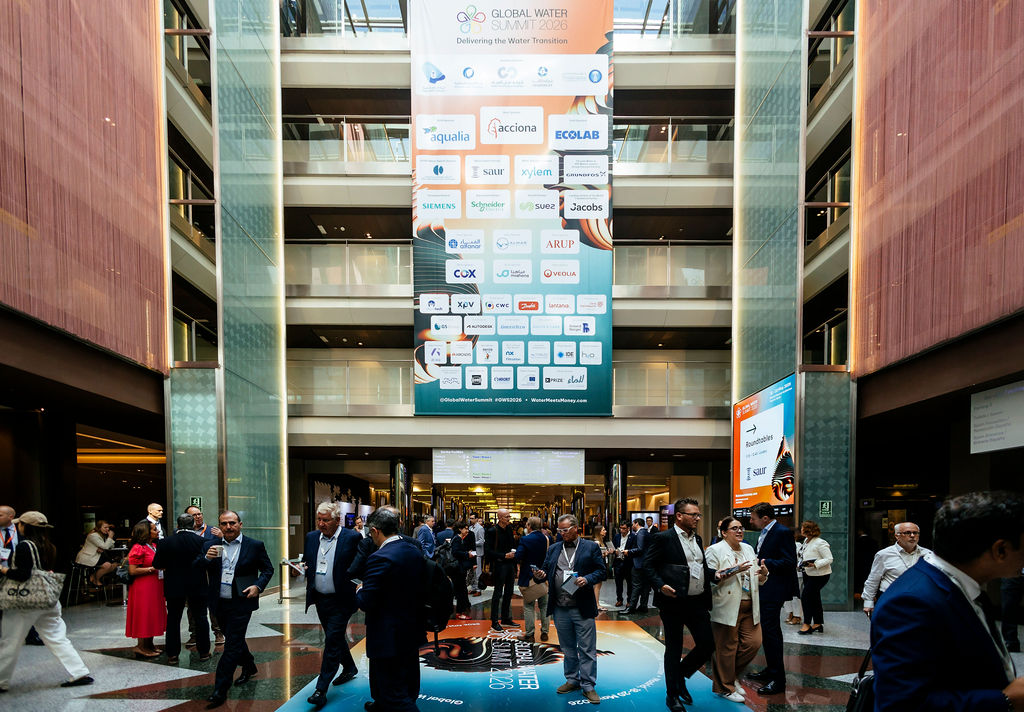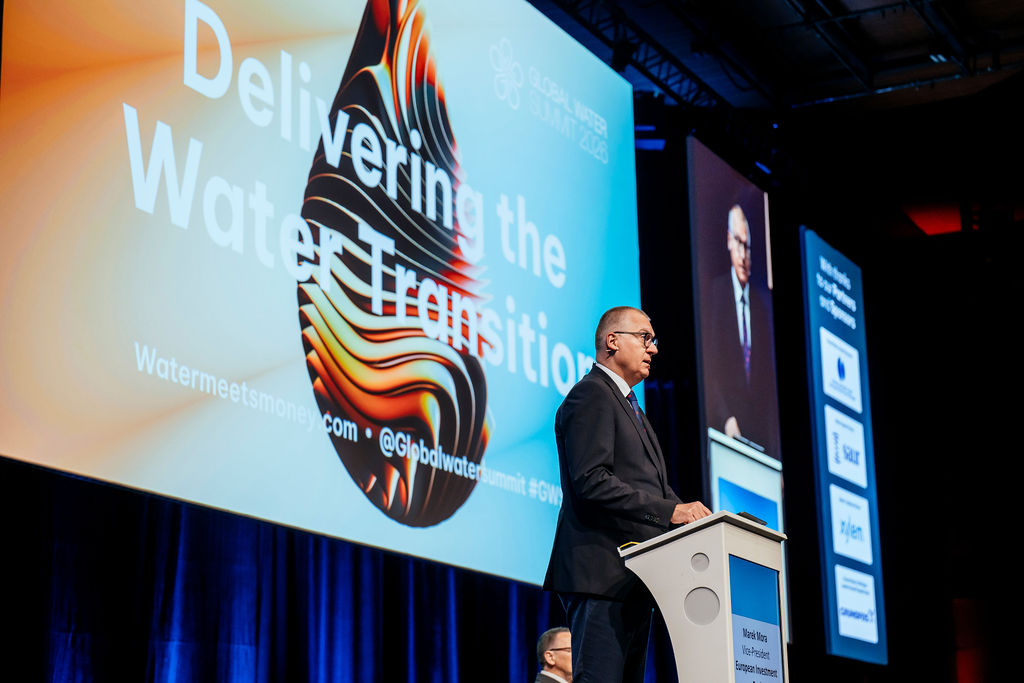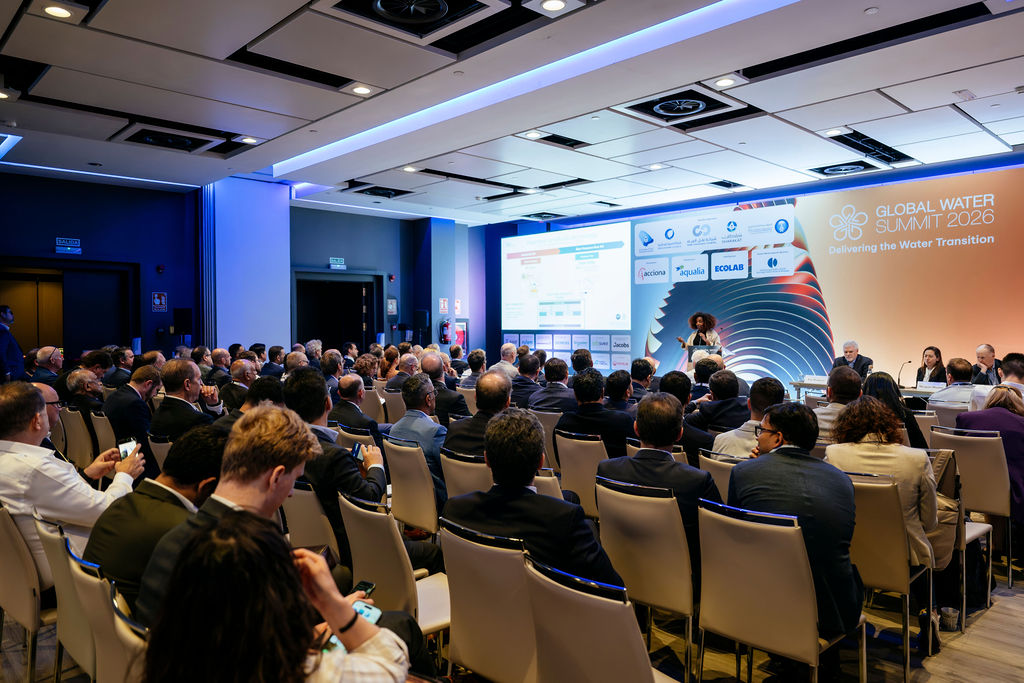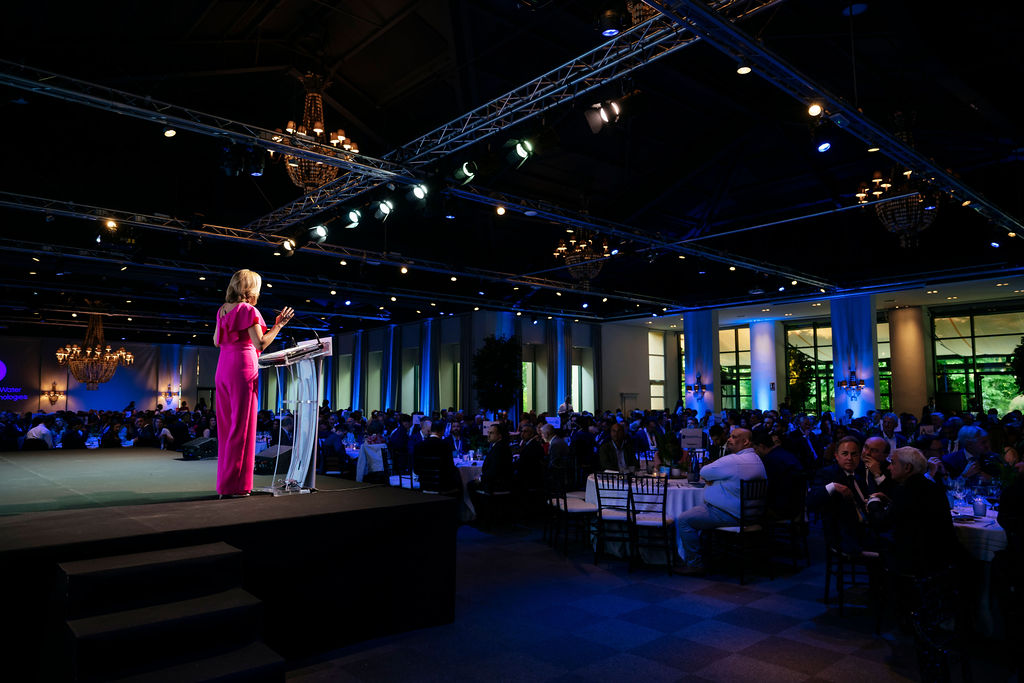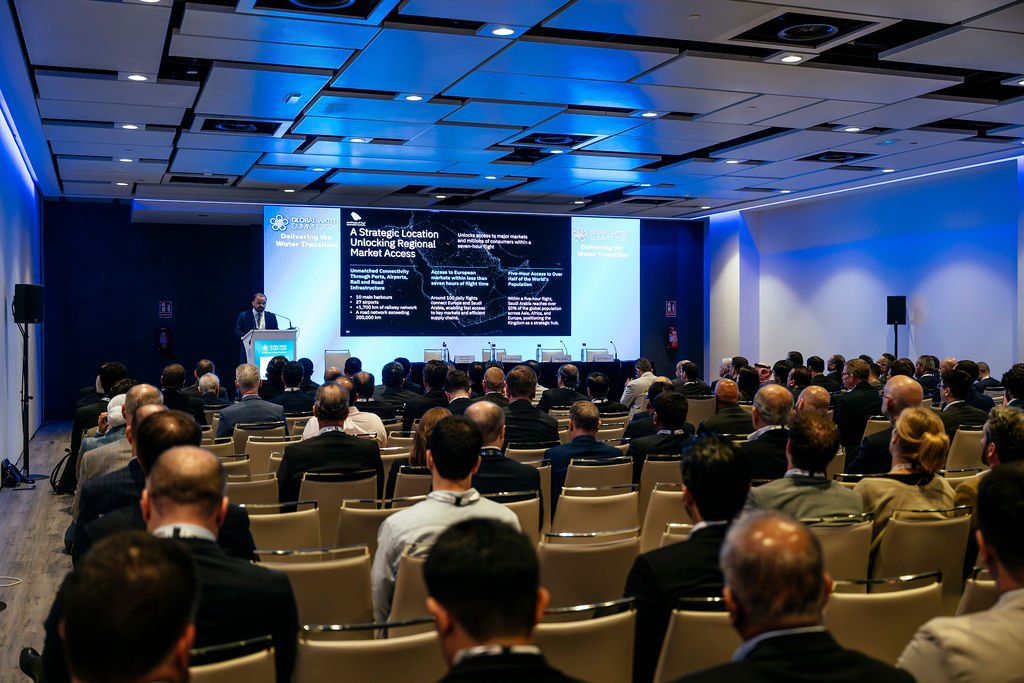
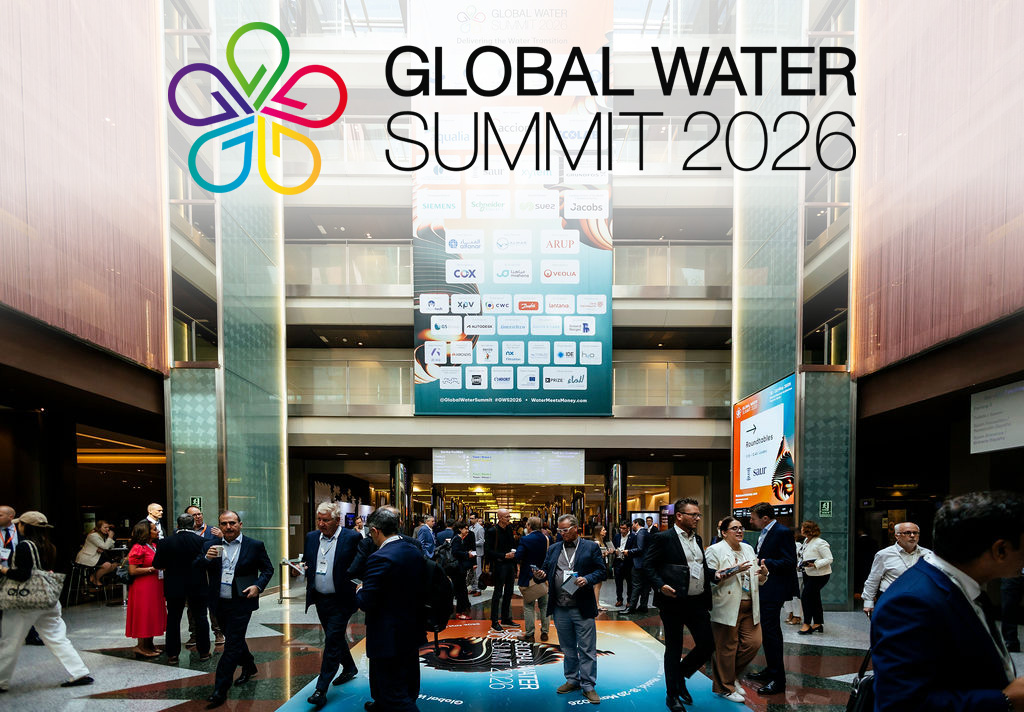
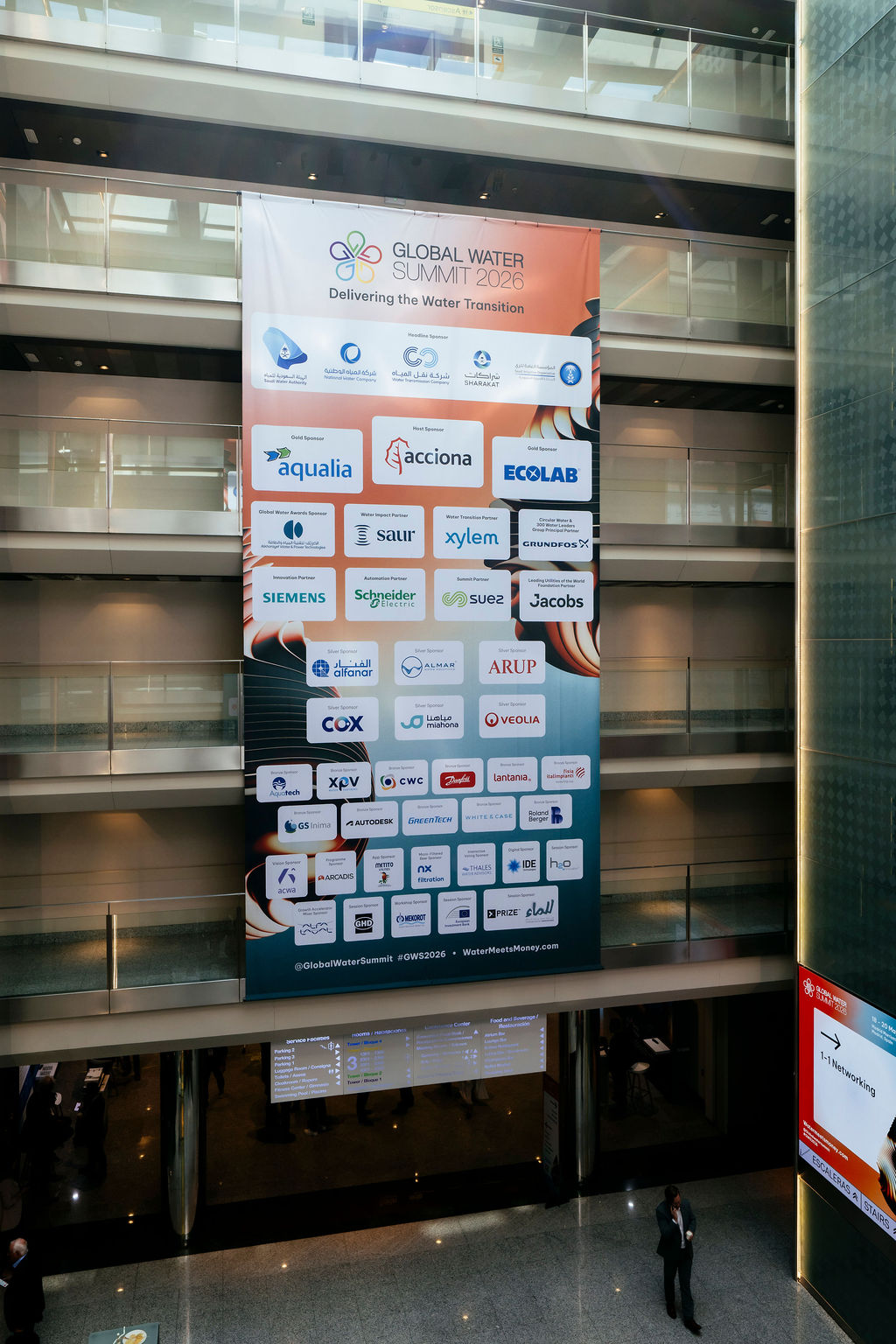
From May 18 to 20, 2026, the international water industry gathered at the Madrid Marriott Auditorium for the Global Water Summit—the world’s leading business conference for the sector. Evodrop was there, alongside more than 1,300 delegates and 380 speakers from around the world. Three days filled with insights, discussions, and strategic ideas under the theme “Delivering the Water Transition.” Here are our key takeaways.
A Global Signal: Water Is Under Pressure
The message from the summit was clear: Clean, high-quality drinking water can no longer be taken for granted. Extreme weather events, rising energy costs, and pressure on public investment budgets are posing challenges to the water sector like never before. Aging pipeline networks, new micropollutants, growing hygiene requirements, and extreme weather events are putting water utilities worldwide under pressure.
According to estimates, $12.6 trillion in investments will be needed this decade to prevent critical supply disruptions—a figure that underscores just how real and urgent the problem is.
Centralized and Decentralized: It's Not an Either/Or Situation
One of the key takeaways from Madrid: The future of water supply does not lie in replacing centralized infrastructure, but in intelligently supplementing it. Centralized networks remain indispensable. But decentralized technologies can have an immediate, pragmatic, and cost-effective impact where it matters most—in buildings, residential homes, hotels, offices, and industrial facilities.
This combination is not a compromise, but a step forward. Much like solar panels or heat pumps, decentralized water treatment is becoming an integral part of modern building technology. Homeowners are taking an active role in shaping their own water quality—regardless of the condition of the final section of the water line.
What decentralized systems actually do:
- More control over your own water quality — regardless of the quality of the water supply network and the age of the pipes
- Protecting Your Home — Limescale, corrosion, and biofilm in pipes, faucets, and household appliances cause significant damage every year
- Sustainability without the hassle — modern systems operate without salt, electricity, or regeneration wastewater
- Preserving the Property's Value — Water quality is increasingly recognized as a measurable indicator of a property's quality
Sustainability as a driver, not just a trend
One thing became particularly clear in Madrid: Resource-efficient solutions are no longer just a “nice-to-have.” The question of how water technologies can contribute to climate-resilient and circular systems was at the center of many discussions. Systems that operate without chemical additives, without increased water consumption, and without energy requirements not only meet ecological standards—they also address a growing need for simple, low-maintenance solutions in everyday life.
What Evodrop is taking away from Madrid
The 2026 Global Water Summit has confirmed what we at Evodrop have been observing for years and consistently implementing in our product development: Water quality is not a niche topic. It is a strategic element of modern building technology, sustainable property management, and proactive healthcare.
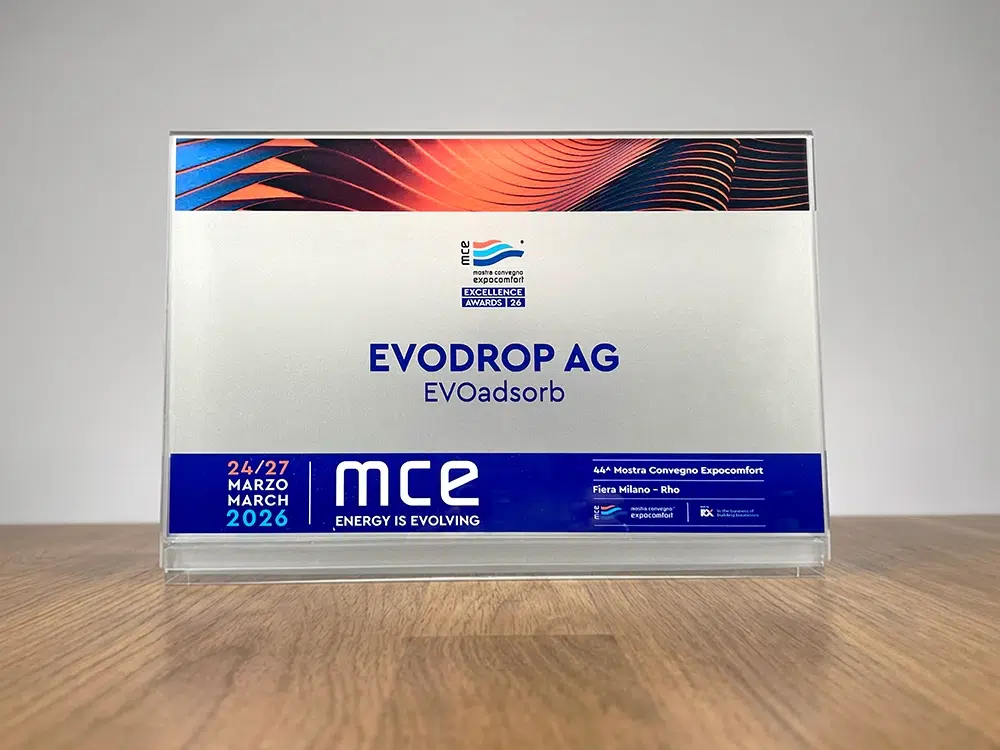
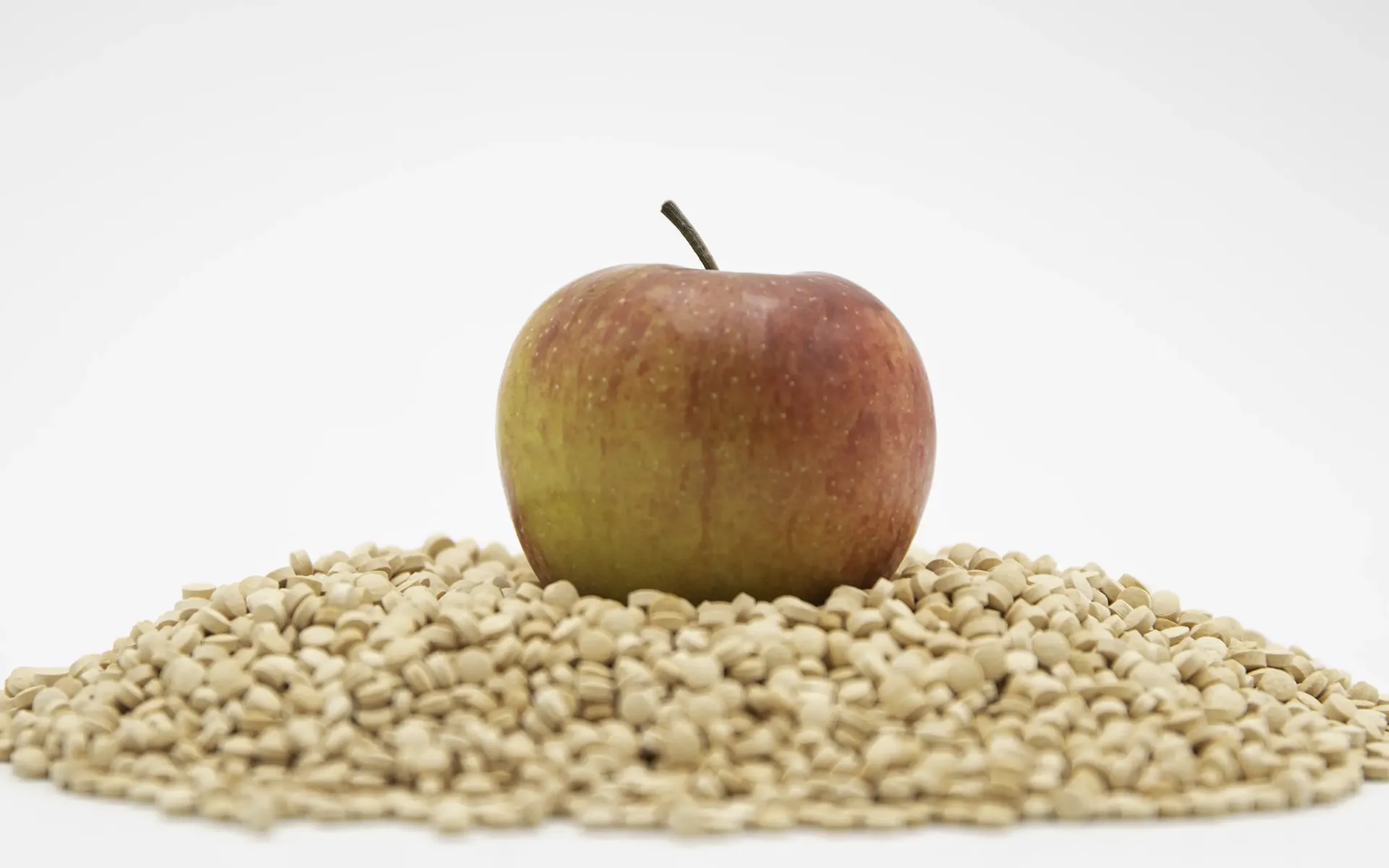
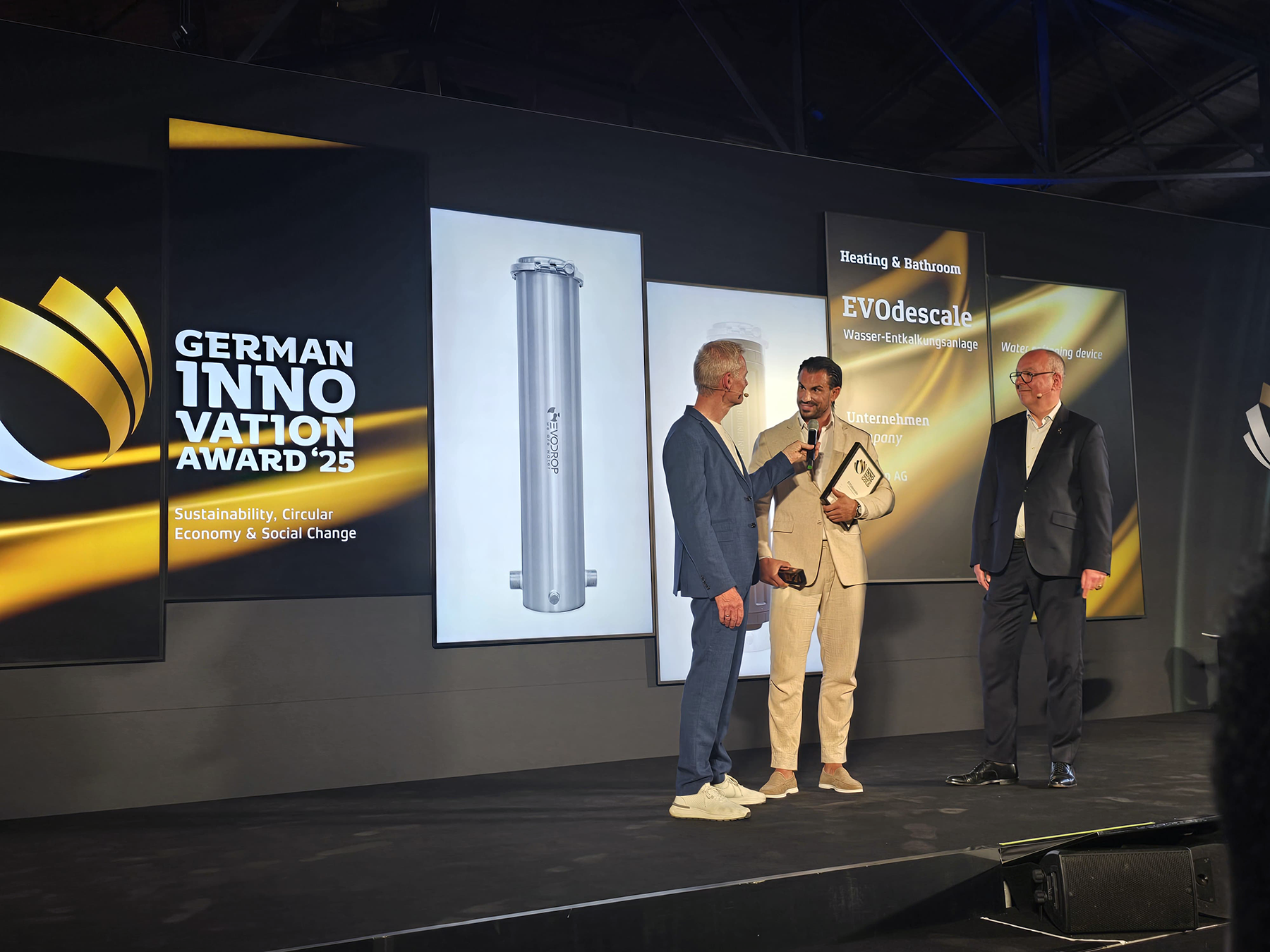
Our product line—from the EVOfilter drinking water filter to the EVOdescale limescale protection system and the EVOadsorb adsorption system—is designed specifically to meet these requirements: decentralized, low-maintenance, salt- and electricity-free, and effective right where the water is used.
The discussions in Madrid were inspiring, candid, and substantive. They reinforced our approach: The market is moving in the right direction—and Evodrop is ready to play an active role in shaping this change.
Do you have questions about water quality in your home or on your property? Please contact us—we’d be happy to advise you.