

Descaling system with salt
Functionality, disadvantages and the demonstrably better alternative of Evodrop
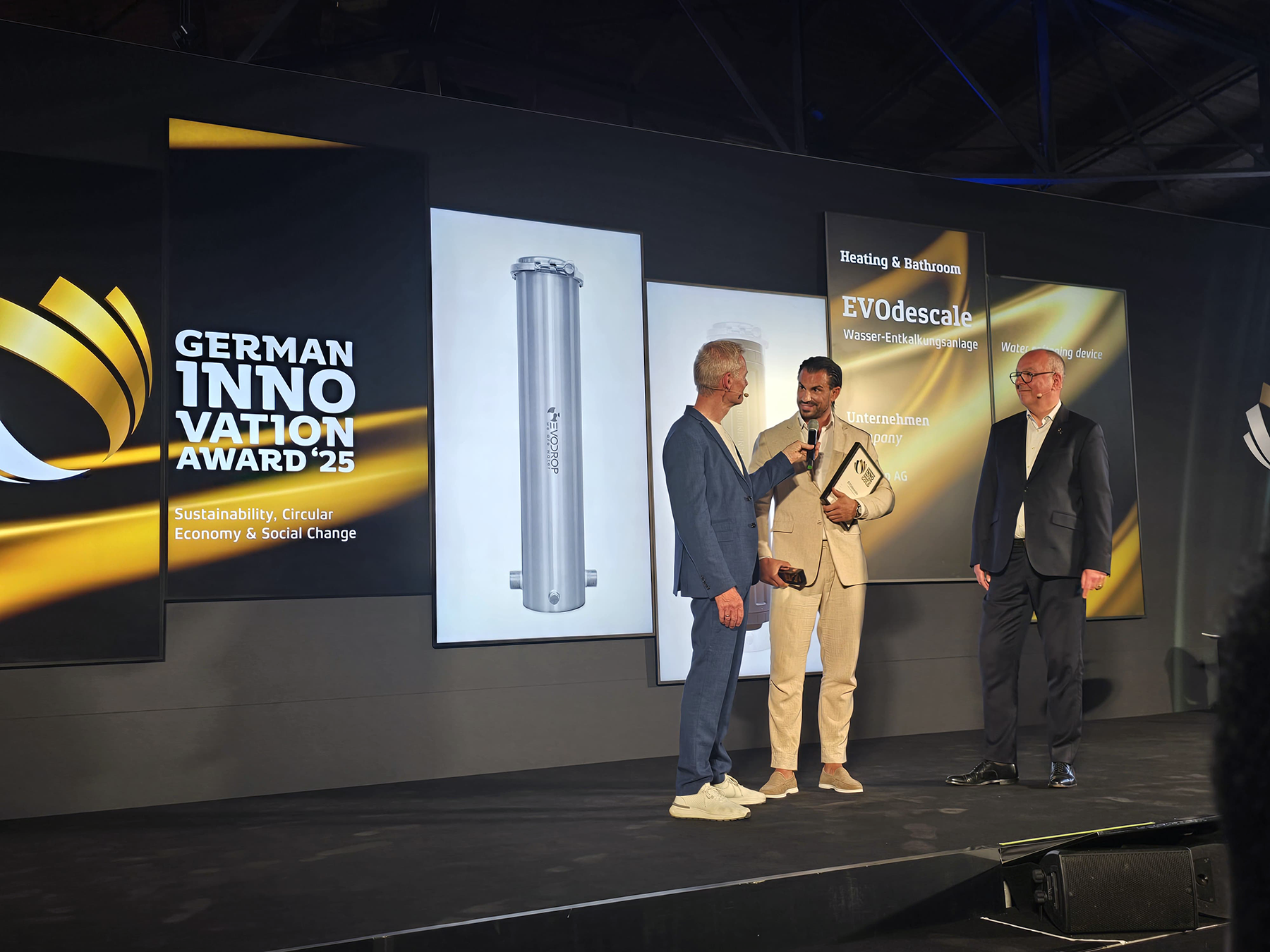
What is a descaling system with salt?
A descaling system with salt is a water treatment device that aims to reduce water hardness by removing or preventing limescale deposits in the water. These systems are particularly popular in regions with hard water to prevent limescale damage in pipes, household appliances and heating systems. The process is based on ion exchange, in which calcium and magnesium ions are replaced by sodium ions to make the water "softer".
What is lime?
Lime is the colloquial term for calcium carbonate (CaCO₃), a chemical compound that occurs in water in the form of calcium and carbonate ions. These minerals are naturally present in groundwater and surface water and determine water hardness. When the water is heated or the pressure changes, the calcium and carbonate ions combine and form solid calcium carbonate, which is deposited on surfaces as limescale.
Limescale deposits are a common problem, especially in regions with hard water. They can build up in pipes, household appliances and heating systems, which can lead to a reduction in efficiency, increased energy consumption and a shortened service life of the appliances. Limescale deposits are therefore not only an aesthetic problem, but also have economic and technical implications.
Although calcium and magnesium are important minerals for the human body, their high concentrations in the water can cause unwanted limescale deposits, which must be removed or reduced by a descaling system.
What is salt?
Salt, scientifically known as sodium chloride (NaCl), is a chemical compound consisting of the elements sodium and chlorine. In its natural form, salt is found in salt deposits, oceans and salt lakes and has been used for thousands of years for various purposes, including preservation, improving the taste of food and in medicine. Salt is also an important component in water treatment, particularly in water softening systems.
How does water softening with salt work?
In water softening with salt, the lime is passed through a resin bed that is saturated with sodium chloride ions bound to synthetic anti-caking agents (salt). The calcium and magnesium ions are replaced by sodium ions and the chloride ends up in the waste water. However, the system requires regular salt regeneration to replenish the sodium reserves and maintain the effectiveness of softening.
Disadvantages of water softening with salt
Although water softening with salt is widely used, it has some significant disadvantages:
- Increased sodium content in drinking water: Ion exchange increases the sodium content in water, which can pose health risks for people with high blood pressure or other health problems.
- Environmental impact: Salt consumption has a considerable impact on the environment, as the salty waste water and chloride enter the sewage system and can have a negative impact on the ecosystem.
- Regular maintenance: Salt-based water softeners require regular maintenance and refilling of salt, which incurs additional costs and effort.
- High costs, The system generates electricity, salt and waste water costs and a service contract is required to maintain the warranty provisions.
- Risk of contamination in the salt container during longer downtimes
- Generation of hazardous waste by the exchange resin
- Increase in metal aggressiveness and therefore risk of corrosion from the salt
- Removal of useful minerals such as calcium and magnesium as it is not possible to distinguish between lime and minerals.
- Regenerating salt is denatured and, in addition to accompanying substances such as clay, iron or potassium hexacyanofferate is added as a flow aid.
Regenerating salts
The regenerating salt is not harmless and this is indicated on the supplementary sheet:
- H290 - May be corrosive to metals.
- H314 - May cause skin and eye burns.
- H400 - Toxic to aquatic organisms.
- P102 - Keep out of the reach of children.
- P315 - If consumed, seek medical attention immediately.
Alternative: Salt-free water softening from Evodrop
At a time when sustainability and environmental protection are becoming increasingly important, it is crucial to question traditional methods, such as water softening with salt, and replace them with more advanced, environmentally friendly technologies. Evodrop offers just that: an innovative and salt-free water softening solution that brings numerous benefits for the environment, health and your wallet.
The sustainable alternative: descaling without salt with Evodrop
The first satisfactory alternative to conventional descaling without salt.
Evodrop offers an innovative and environmentally friendly alternative that works completely without the use of salt and chemicals. The technology is based on a patented malic acid complex that binds and removes limescale in the water without changing the chemical composition of the water. This ensures that minerals such as calcium and magnesium are retained in the water.
Advantages of salt-free Evodrop technology:
- Tested and certified descaling. Evodrop descaling was tested in the accredited German DVGW laboratory in accordance with worksheet W512 and received the best possible result with a grade of 1.
The system is also ROHS, FDA and MOCA certified. - Environmentally friendly: Without salt and harmful chemicals, there is no pollution from saline waste water. The technology significantly reduces the ecological footprint and actively contributes to environmental protection.
- Harmless to health: As no sodium gets into the water, the water remains healthy and rich in minerals. Important minerals such as calcium and magnesium are retained, which increases the nutritional value of the water.
- Minimal maintenance: A simple annual cartridge change is all that is needed, no tools required. No regular salt refills or complex maintenance work is required.
- Effective limescale protection: With a limescale protection rate of up to 94.2 %, Evodrop protects pipes, household appliances and heating systems from limescale deposits, which extends the service life of the systems.
How does a descaling system with salt work?
- Ion exchange principle: The hard water, which is rich in calcium and magnesium ions, flows through a resin bed that is filled with sodium ions. Ion exchange takes place when the calcium and magnesium ions are replaced by the sodium ions, which reduces the hardness of the water.
- Resin regeneration: The resin in the descaling system becomes saturated over time and must be regularly regenerated with a sodium chloride solution (salt solution). This regeneration flushes the calcium and magnesium ions out of the resin and replaces them with new sodium ions.
- Wastewater containing salt and chloride: During regeneration, wastewater containing salt is produced and discharged into the sewage system. The resulting high water consumption and the potential environmental impact are major disadvantages of the process.
Disadvantages of a descaling system with salt
- Increased sodium content in drinking water: During descaling by ion exchange, sodium ions get into the drinking water, which can pose health risks for people with high blood pressure or heart problems.
- Environmental pollution from saline wastewater: The saline and chloride-containing wastewater produced during regeneration can damage water bodies and ecosystems, as has been proven several times in various studies.
- High water consumption during regeneration: Regeneration of the resin requires additional water, which leads to higher consumption and unnecessary strain on resources.
- Regular maintenance and costs: Salt systems require constant maintenance and the purchase of additional salt, which involves additional costs and time. If the annual service contract is not taken out, the warranty provisions do not apply.
- Removal of valuable minerals: Ion exchange not only removes limescale, but also important minerals such as calcium and magnesium, which are essential for good health.
- Risk of contamination and legionella: Harmful germs can grow in salt containers if the water stagnates or is not properly maintained.
- High water consumption during regeneration: Between 80 and 150 liters of water are consumed per regeneration, which is an unnecessary use of resources, especially in regions where water is scarce.
- Hazardous waste due to replacement resin: The replacement resin must be specially disposed of due to the chemical contamination and must not be disposed of in normal waste.
- Change in the taste of the water: Ion exchange changes the taste of the water, which is perceived as a disadvantage by many consumers.
- Removal of valuable minerals: During the process, not only lime is removed, but also important minerals such as calcium and magnesium, which are beneficial to health.
- Increase in metal aggressiveness and therefore risk of corrosion from the salt.
- Regenerating salt is denatured and, in addition to accompanying substances such as clay, iron or potassium hexacyanofferate is added as a flow aid.
The regenerating salt is not harmless and this is indicated on the supplementary sheet:
- H290 - May be corrosive to metals.
- H314 - May cause skin and eye burns.
- H400 - Toxic to aquatic organisms.
- P102 - Keep out of the reach of children.
- P315 - If consumed, seek medical attention immediately.


Discover the difference!
Convince yourself of the power of our limescale protection with a simple self-test. All you need is a kettle or a pan. Maximum limescale protection, no change in taste.
The test kits are only sent to Germany, Switzerland or Austria

Scientifically proven technology and numerous awards
Evodrop's salt-free water softening technology is based on scientifically sound principles and has been extensively tested by independent testing to confirm its effectiveness, safety and sustainability. Unlike conventional salt softening systems that rely on ion exchange, Evodrop uses an innovative method with a patented malic acid complex that prevents limescale deposits without increasing the sodium content in the water or removing valuable minerals.
Independent testing and scientific evidence
Evodrop has undergone rigorous testing and verification procedures to prove the performance of its limescale prevention technology. The most important tests include:
- DVGW: The technology has also been tested in an accredited DVGW laboratory (German Technical and Scientific Association for Gas and Water) to ensure that the system meets the minimum requirement of 80% descaling.
- FDA and MOCA certification: Evodrop has also received FDA and MOCA certifications, which ensure that the materials and processes meet the highest standards for safety and health compatibility. These certifications are further proof of the reliability and quality of the technology used.
- Malic acid is an organic component of apples. Malic acid is an essential intermediate product in the energy production cycle of living organisms and plants. In this respect, it is completely neutral, tasteless and has been proven to have no negative effects on the body. On the contrary, studies indicate that, thanks to malic acid, minerals are now available in organic form.
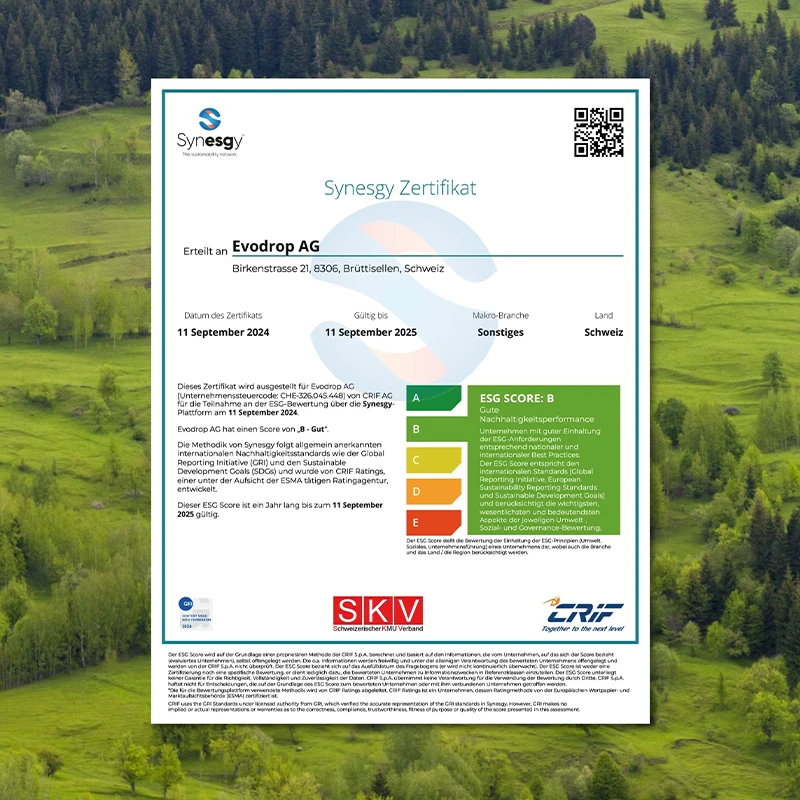
Awarded for innovation and quality
Our technologies set new standards in water treatment. Confirmed by international awards and independent experts worldwide.










Why have salt-based water softening systems been severely restricted or banned in some US states and regions?
1. Saline wastewater (brine) and environmental pollution
Salt-based water softeners work by ion exchange and generate salty wastewater (brine) during each regeneration cycle, which enters the sewage system and from there into natural waters and groundwater. This brine contains high concentrations of chloride and sodium, which can accumulate in water bodies.
- In regions with sensitive freshwater ecosystems, increased salinity can worsen living conditions for aquatic organisms and plants.
2. Complications in wastewater treatment and reuse
Many municipalities are pursuing programs to reuse municipal wastewater, for example for irrigation or groundwater recharge. Salt-contaminated wastewater is problematic for such systems because existing wastewater treatment plants cannot remove sufficient amounts of salt.
This means that water that should actually be reused is no longer suitable for this purpose or requires costly post-treatment.
3. Local regulations and legal basis
Based on these environmental and water quality concerns, various authorities have enacted legal frameworks and regulations governing the use of traditional salt-based water softening systems:
- In Texas, a statewide ban on salt-based water softeners was introduced back in 2001; subsequent amendments now only allow them under certain conditions.
- In California, regional water authorities can issue local bans or restrictions on such systems under the California Water Code, particularly in regions that do not comply with salt/chloride contamination requirements.
- Other states such as Connecticut, Michigan, Minnesota, and Wisconsin have similar restrictions, some of which are linked to bans on brine discharge into sewage systems or programs to promote salt-free technologies.
In some local communities, water softening systems have even been completely banned and existing systems dismantled; inspections and enforcement measures are actively pursued in some areas.
4. Increased regulatory control in response to studies and practical effects
Studies have shown that rising salt and chloride concentrations in waterways and sewage systems cause serious ecological and technical problems:
- Aquatic species are sensitive to saline water, and studies indicate negative effects even at relatively low salt concentrations.
- The costs and effort involved in sewage treatment plants and infrastructure are increasing because salt cannot be easily removed.
Why are salt-based water softeners banned in parts of the USA?
The restrictions and bans on salt-based water softeners in parts of the US are not based on health issues or medical arguments, but on water management, ecological, and wastewater engineering reasons:
- Brine discharge pollutes waterways and ecosystems.
- Salt-contaminated wastewater hinders water reuse and treatment processes.
- Regulatory authorities have used local powers to restrict or ban systems in order to achieve environmental goals and water quality targets.
In the affected regions, salt-free technologies or alternative water treatment concepts are therefore increasingly being used to avoid environmental pollution from saline wastewater.
Research and continuous development
Evodrop not only relies on existing technologies, but also strives to continuously improve its products and develop new innovations in the field of water treatment. The company's own research and development department is constantly working on optimizing processes and introducing new technologies in order to meet customer requirements and further advance sustainability goals.
The future of water softening lies in the absence of salt
While salt systems are still widely used, Evodrop's salt-free descaling technology offers a more sustainable and cost-effective alternative. The combination of efficient limescale removal, low environmental impact and easy maintenance makes Evodrop a forward-looking solution for anyone who values sustainable water treatment.



Evodrop.com in the individual test at getestet.de
How does Evodrop perform in the areas of website, performance and service? The renowned seal of approval "getestet.de" took a close look at Evodrop's concept, website and customer service.
Frequently asked questions (FAQ) about the descaling system with salt
What is a descaling system with salt?
How does a descaling system with salt work?
What are the disadvantages of a descaling system with salt?
The use of a descaling system with salt has several disadvantages:
- Increased sodium content in the water: Ion exchange leads to a higher sodium content, which can be problematic for people with high blood pressure or certain health restrictions.
- Environmental pollution: The regeneration of the resin produces salty waste water that pollutes the environment.
- High water consumption during regeneration: Regeneration requires additional water, which increases operating costs and is particularly unfavorable in regions with water shortages.
- Removal of important minerals: Not only lime, but also useful minerals such as calcium and magnesium are removed from the water.
- Regular maintenance required: The system must be regularly topped up with salt and serviced to ensure continuous operation.
What is the difference between a descaling system with salt and a salt-free descaling system?
The main difference lies in the type of water treatment:
- A descaling system with salt uses ion exchange to replace calcium and magnesium ions with sodium, which makes the water softer. This method requires regular regeneration with salt.
- A salt-free descaling system, such as Evodrop's, works with a patented malic acid complex that binds the limescale in the water and prevents it from building up. The water remains free of sodium and retains its natural minerals such as calcium and magnesium, which is healthier and more environmentally friendly.

